
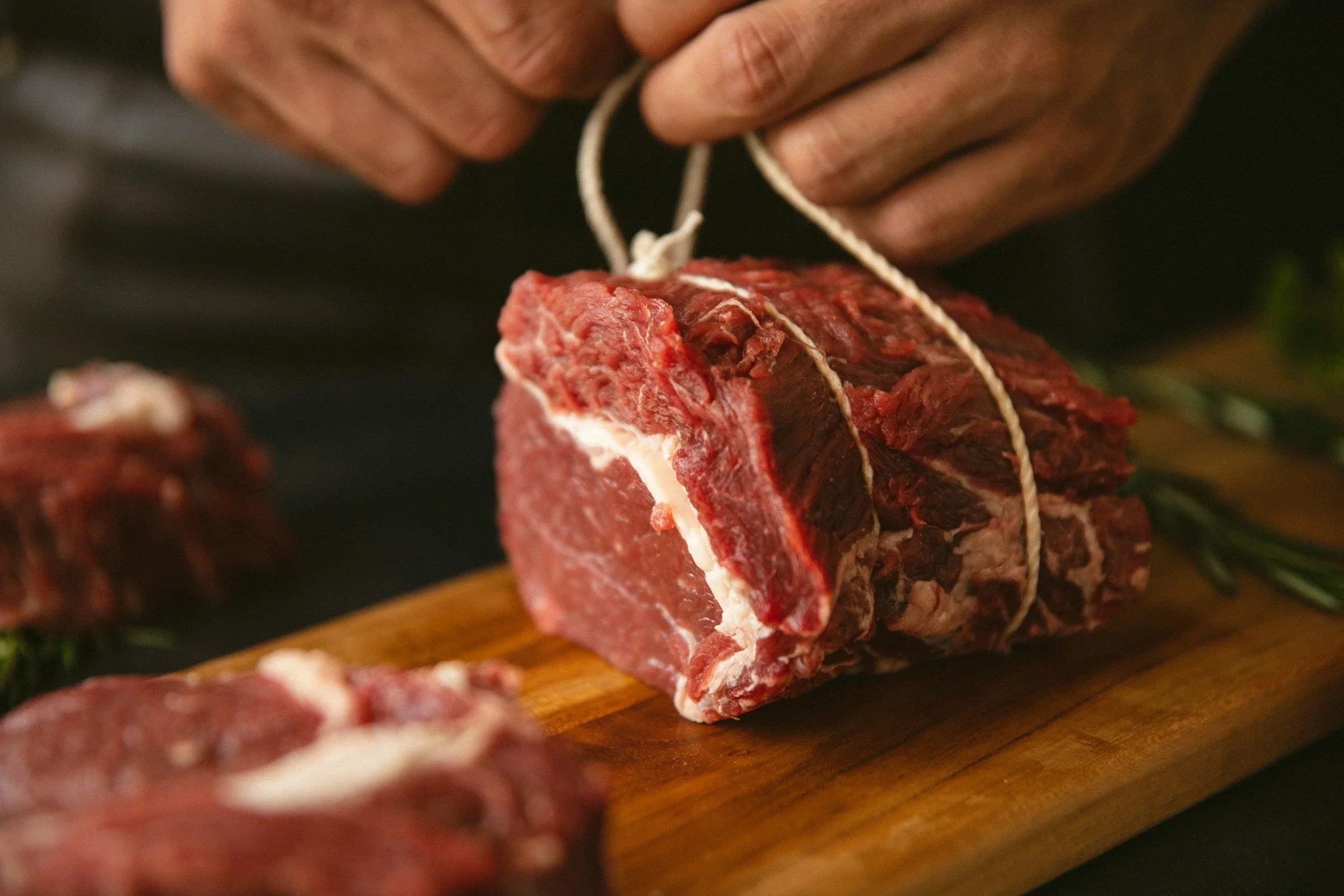
Smoked Prime Rib on Big Green Egg & Pellet Grill | Reverse Sear

Prime rib is the king of roasts. A thick, bone-in standing rib roast — salted overnight, rubbed with garlic and herbs, smoked low and slow over hardwood, then blasted with searing heat for a deep, mahogany crust — is one of the most impressive things you can cook outdoors. And it's far easier than most people think.
This recipe uses the reverse sear method: smoke the roast at a low temperature until the interior reaches your target doneness, rest it, then crank the heat for a quick sear at the end. The result is edge-to-edge pink with a thin, flavorful crust — no thick band of overcooked gray meat around the outside like you get from a traditional high-heat roast.
We wrote this for two setups: the Big Green Egg (kamado-style lump charcoal) and the Green Mountain pellet grill. Both are ideal for prime rib because they hold low temperatures consistently and can also crank up to 500°F+ for the sear. The instructions cover both, so use whichever you have.
Why Reverse Sear Is the Best Method for Prime Rib
The traditional method for prime rib — roast at high heat, then rest — works, but it has a fundamental problem. The outside of the roast cooks much faster than the center, which means by the time the middle reaches medium rare, the outer inch or two is already well done. You get that gray ring around the edges that nobody wants.
The reverse sear flips this around. By cooking at 225–250°F first, heat moves through the roast gently and evenly. The entire roast comes up to temperature at roughly the same rate, so you get consistent medium rare from edge to edge. The low smoke temperature also gives the beef time to absorb hardwood smoke flavor and develop a beautiful smoke ring.
Then the sear at the end (500°F+ for just a few minutes) creates the Maillard reaction — that dark, flavorful, caramelized crust — without overcooking the interior. The brief rest while you crank the heat also lets the juices redistribute, so when you slice, the meat stays juicy instead of bleeding all over the cutting board.
The reverse sear also gives you a huge timing advantage. Because the roast cooks so slowly, you have a wide window to pull it at the right temperature. At 225°F, the internal temp rises about 5°F per 15–20 minutes, which means you're not going to overshoot your target in the time it takes to walk to the kitchen and back. At high heat, that same 5°F happens in minutes.
Equipment You'll Need
Choosing Your Roast
Bone-in is the way to go. The bones insulate the meat from direct heat, helping it cook more evenly, and they add flavor during the long smoke. Ask your butcher to chine the roast (cut the bones away from the meat, then tie them back on). This gives you the benefits of bone-in during cooking, but makes carving dramatically easier — you just snip the twine and the bones come right off.
USDA Prime vs. Choice: Prime grade has the best marbling and will produce the most tender, flavorful result. Choice is excellent and about half the price per pound — for most people, it offers the best balance of quality and value. Either works beautifully with this recipe. Avoid Select grade for prime rib.
How much to buy: Plan for roughly 1 bone per 2 people for generous servings. A 4-bone roast (8–10 lbs) feeds 8–10 people comfortably. If your crowd likes leftovers (and trust us, you want leftovers), go a bone heavier.

Smoke Wood & Pellet Selection
Prime rib has a rich, beefy flavor that can stand up to medium-intensity smoke woods. Here's what works best:
For the Big Green Egg: Use 2–3 fist-sized chunks of oak, hickory, or pecan placed directly on the lump charcoal. Oak gives a clean, classic smoke. Hickory is bolder. Pecan is slightly sweet and nutty — our personal favorite with beef. Avoid mesquite — it's too aggressive for a long cook and can turn bitter.
For the Green Mountain pellet grill: GMG's Premium Gold Blend or Texas Blend pellets are ideal. Hickory or oak-heavy blends also work well. Remember that pellet grills produce most of their smoke at temperatures below 250°F, so the low-and-slow phase is where all the smoke flavor gets absorbed. Once you crank the heat for the sear, the wood type doesn't matter.
Seasoning: Brand Rubs or DIY
We give you a simple DIY herb rub below, but if you want to keep it even easier, both Big Green Egg and Green Mountain Grills make excellent ready-to-go seasonings that are purpose-built for beef:
Big Green Egg Classic Signature Steakhouse Seasoning — A savory blend of thyme, basil, and premium spices. Gluten-free, kosher, no MSG. Use it as a dry rub 30+ minutes before cooking, or sprinkle generously right before the roast goes on the Egg. One jar covers a full prime rib easily.
GMG Beef Dry Rub — Their #1 seller. Notes of smoked paprika, mustard, and cayenne. No MSG or preservatives. Mix it with olive oil to make a slurry (paste) and coat the roast for deeper flavor penetration, or use it as a straight dry rub. Either way, it builds a phenomenal bark.
Both options are available at our Leisure Time Inc. showrooms in Boise, Idaho Falls, and Twin Falls.
Smoked Prime Rib — Reverse Seared
Big Green Egg or Green Mountain Pellet Grill
📋 Ingredients
The Roast
- 1 bone-in prime rib roast, 4–5 bones (8–12 lbs), USDA Choice or Prime
- 3 tbsp kosher salt (for dry brine)
Herb Rub (DIY Option)
- 2 tbsp coarse black pepper
- 1 tbsp garlic powder
- 1 tbsp onion powder
- 2 tsp dried rosemary, crushed
- 2 tsp dried thyme
- 1 tsp smoked paprika
Or substitute: BGE Classic Steakhouse Seasoning or GMG Beef Dry Rub — applied liberally
Garlic-Herb Butter Paste
- 4 tbsp butter, softened
- 6 cloves garlic, minced
- 2 tbsp fresh rosemary, finely chopped
- 2 tbsp extra virgin olive oil
- 2 tbsp Dijon mustard
Au Jus
- 2 cups beef broth
- ½ cup dry red wine
- 1 tbsp Worcestershire sauce
- 1 tbsp butter
- 1 shallot, minced
- Pan drippings from the roast
Creamy Horseradish Sauce
- 1 cup sour cream
- 3 tbsp prepared horseradish (drained)
- 1 tbsp Dijon mustard
- 1 tsp lemon juice
- Pinch of salt
👨🍳 Instructions
Remove the roast from its packaging and pat completely dry with paper towels. Trim any excess hard fat, but leave at least a ½-inch fat cap — it bastes the meat as it renders during the smoke.
Season the entire roast generously with 3 tablespoons kosher salt, pressing it into all surfaces including the ends and between the bones. Place on a wire rack set over a sheet pan (this allows air to circulate underneath for better crust formation) and refrigerate uncovered for 12–24 hours.
The dry brine does two things: it seasons the meat deeply (not just the surface), and the uncovered overnight rest dries out the exterior, which leads to a better bark and sear later.
Remove the roast from the fridge 1–2 hours before cooking to let it come toward room temperature. This is important — a cold roast straight from the fridge will cook unevenly, with the outside overcooking before the center catches up.
Make the paste: In a small bowl, combine softened butter, minced garlic, fresh rosemary, olive oil, and Dijon mustard. Mix into a thick paste.
Apply: Coat the entire roast with the Dijon-butter paste first — this acts as a flavor base and helps the dry rub adhere. Then apply the herb rub (or your BGE/GMG brand rub) generously on all sides, pressing it into the paste. Don't season the bones — just the meat surfaces.
While the roast tempers, stir together the sour cream, horseradish, Dijon, lemon juice, and salt in a small bowl. Cover and refrigerate. Making it ahead lets the flavors meld — it'll taste noticeably better after an hour in the fridge than when first mixed.
Big Green Egg: Load with lump charcoal and light. Install the convEGGtor (plate setter) for indirect cooking. Add 2–3 fist-sized chunks of oak, hickory, or pecan directly on the lit charcoal. Stabilize the Egg at 225–250°F with the vents partially open. Place an aluminum drip pan on the convEGGtor under the grate to catch drippings for the au jus.
Green Mountain pellet grill: Fill the hopper with your chosen pellets. Set the temperature to 225–250°F and let the grill come up to temp and stabilize. Place an aluminum drip pan on the grate or on a lower rack to catch drippings.
Place the prime rib directly on the grate, bone-side down (or fat-cap up if boneless). Insert a leave-in probe thermometer into the thickest part of the meat, making sure it's not touching bone.
Close the lid and let it smoke. Do not open the lid for at least the first 2 hours — every time you open it, you lose heat and smoke, adding to the cook time. The mantra is: "If you're lookin', you ain't cookin'."
Smoke until the internal temperature reaches 110–115°F. For an 8–10 lb roast at 225–250°F, this typically takes 3–4 hours (roughly 25–30 minutes per pound). The exact time will vary based on the size and shape of your roast, your grill's actual temperature, and outdoor conditions.
The smoke ring and bark are forming during this phase — don't rush it. The meat will look deeply colored on the outside but will still be rare in the center.

When the roast hits 110–115°F, remove it from the grill and set it on a cutting board. Do not cover it with foil — you want the surface to stay dry for a better sear. Let it rest for 20–30 minutes.
While the roast rests, collect the drippings from the drip pan and set aside for the au jus.
Big Green Egg: Remove the convEGGtor. Open the vents fully and let the Egg climb to 500–550°F for direct, high-heat searing.
Green Mountain pellet grill: Crank the temperature to 450–500°F (or max, depending on your model) and let it stabilize.
Place the roast back on the grill over direct heat (Big Green Egg) or on the hot grate (pellet grill). Sear for 2–3 minutes per side until a deep, dark, mahogany-brown crust forms. You want aggressive caramelization — the Maillard reaction needs high heat.
Monitor the internal temperature closely during the sear. Pull the roast when it reaches 125–130°F for medium rare (the temp will rise another 3–5°F during the final rest).
Transfer to a cutting board and tent loosely with foil. Rest for 10–15 minutes before carving.
If your roast was chined (bones cut and tied back on), simply snip the twine and the bones will separate cleanly. Slice the boneless roast into ½ to ¾-inch thick slices against the grain. Don't discard the bones — season them with a little extra rub and throw them back on the grill for a few minutes. Smoked beef ribs are the cook's reward.
While the roast does its final rest, make the au jus on the stovetop (or in a cast iron pan on the grill).
Melt 1 tablespoon butter in a saucepan over medium heat. Add the minced shallot and cook until soft, about 2 minutes. Pour in ½ cup red wine to deglaze, scraping up any browned bits. Let the wine reduce by half.
Add 2 cups beef broth, 1 tablespoon Worcestershire sauce, and the reserved drippings from the drip pan (strain out any solids first). Simmer for 5–8 minutes until slightly reduced. Taste and adjust salt if needed.
Serve warm alongside the sliced prime rib for dipping.
Internal Temperature Guide
Prime rib is best served medium rare. Here's the target temperature to pull from the grill (before resting — it will rise another 3–5°F):
| Doneness | Pull Temp | Final Temp (after rest) | Description |
|---|---|---|---|
| Rare | 115–120°F | 120–125°F | Cool red center, very tender |
| Medium Rare ★ | 125–130°F | 130–135°F | Warm pink center — recommended |
| Medium | 130–135°F | 135–140°F | Pink center, firmer texture |
| Medium Well | 140–145°F | 145–150°F | Slight pink, significantly firmer |
The ends of the roast will always be more done than the center. This is actually an advantage — guests who prefer medium or medium-well can take an end cut, while medium-rare lovers get the center slices. One roast, multiple preferences served.
Tips for Success
Don't skip the dry brine. Salting 12–24 hours ahead seasons the meat deeply, not just on the surface. It also dries the exterior, which is critical for bark formation. A wet roast won't develop a crust no matter how hot your sear is.
Use a reliable thermometer. This is a $75–$150+ piece of meat. Guessing by time alone is a gamble you don't want to take. A leave-in probe thermometer with an alarm (or a Bluetooth/WiFi model) lets you monitor without opening the lid. The meat's internal temperature is the only metric that matters.
Keep the lid closed. Every time you open the Big Green Egg or pellet grill during the low-and-slow phase, you lose 25–50°F of heat and disrupt the smoke environment. Set the probe, close the lid, and walk away. Check the temp on your phone or the probe display.
Rest the roast. Resting is not optional. If you slice immediately after cooking, the juices run out onto the cutting board instead of staying in the meat. Twenty minutes of resting makes the difference between a juicy slice and a dry one.
Plan your timing backwards. Prime rib takes roughly 25–30 minutes per pound at 225–250°F, plus 20–30 minutes of rest, plus 5–8 minutes of sear, plus another 10–15 minutes of final rest. For a 10 lb roast, you're looking at about 5–6 hours total. Start earlier than you think — the roast can rest (tented with foil) for up to 45 minutes without losing significant temperature, so finishing early is far better than finishing late.
Frequently Asked Questions
Big Green Egg vs. pellet grill — which is better for prime rib?
Both produce excellent results. The Big Green Egg gives you slightly more smoke flavor (from lump charcoal + wood chunks) and can reach higher sear temperatures (600°F+). A Green Mountain pellet grill is more set-it-and-forget-it — the digital controller holds temperature precisely, and many models have WiFi so you can monitor from your phone. If you want a hands-off cook, go pellet. If you want maximum smoke and char, go Egg.
Can I use a boneless roast?
Yes, but bone-in is preferred. The bones insulate the meat and add flavor. If you go boneless, reduce your cook time slightly (it will smoke faster) and use a roasting rack to elevate the meat off the grate. Also tie the roast with butcher twine at 1-inch intervals to help it cook in a uniform shape.
What wood should I use?
Oak is the classic choice for beef — clean, medium smoke. Hickory is bolder and pairs well with the garlic-herb rub. Pecan is slightly sweeter and nutty — our personal favorite. Cherry adds a hint of sweetness and gives the bark a beautiful mahogany color. Avoid mesquite for a long cook — it can turn bitter.
Do I need to tie the roast?
If your butcher chined it (cut the bones away and tied them back), it's already tied and you're good. If not, tying the roast with butcher twine at 1-inch intervals helps it hold a uniform cylindrical shape, which promotes more even cooking. It takes 5 minutes and makes a noticeable difference.
What if I overshoot my target temperature?
This is one of the biggest advantages of the reverse sear — because the roast cooks so slowly at 225°F, overshooting is unlikely. If you do go a few degrees past your target, it's usually salvageable. Medium rare at 135°F is still excellent. The critical thing is don't panic-sear a roast that's already at 130°F — you'll push it to medium-well in seconds.
Can I prep the roast the morning of instead of the night before?
You can, but you'll lose some of the benefits of the overnight dry brine. If you're short on time, salt the roast at least 4 hours before cooking and refrigerate uncovered. Anything less than 1 hour, and the salt won't have penetrated past the surface. Never salt and immediately cook — you'll just get a salty exterior and bland interior.
What sides go with smoked prime rib?
Classic pairings: creamy horseradish sauce (included in this recipe), roasted garlic mashed potatoes, Yorkshire pudding, creamed spinach, roasted Brussels sprouts, or a simple green salad. The au jus doubles as a dipping sauce and a drizzle for the sides.
What about leftovers?
Prime rib makes incredible leftover meals. French dip sandwiches (sliced thin on crusty bread with warmed au jus for dipping), prime rib hash with eggs for breakfast, or sliced cold on a salad. Leftover prime rib keeps 3–4 days refrigerated and reheats gently in a low oven (250°F, covered with foil, with a splash of broth to keep it moist).
📄 Download the Printable Recipe Card
All seven phases, the au jus, the horseradish sauce, the temp guide, and tips — on one clean printable page.
⬇ Download PDF Recipe Card