
Classic Pepperoni Pizza - Gozney Ovens

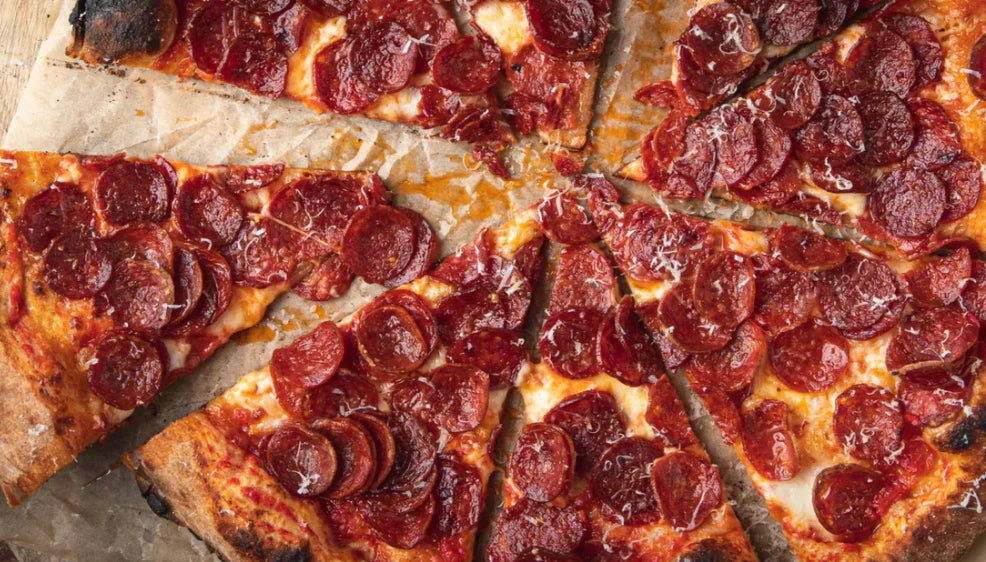
There's something deeply satisfying about pulling a blistered, bubbling pepperoni pizza out of a screaming-hot Gozney pizza oven. The crust puffs and leopard-spots in under 90 seconds. The pepperoni curls into crispy little cups that pool with rendered fat. The sauce — made from nothing but crushed San Marzanos and a few aromatics — tastes bright and alive against all that heat.
This recipe takes the classic pepperoni pizza and elevates it with a poolish pre-ferment — a simple overnight starter that transforms an ordinary dough into something with real depth, complex flavor, and that incredible open-crumbed, airy texture you see in the best pizzerias. It takes a bit of planning ahead (you'll start the poolish the night before), but the hands-on work is minimal and the payoff is massive.
Why This Recipe Works
The Poolish Advantage: A 12–16 hour pre-ferment develops deep, complex flavors and an extensible dough that stretches like a dream. The long fermentation also makes the crust more digestible and creates those coveted air bubbles in the cornicione.
No-Cook Sauce: Raw San Marzano sauce stays bright and fresh — the intense heat of the Gozney cooks it in seconds, preserving that vibrant tomato flavor instead of dulling it.
Gozney Heat: At 800–850°F, the rolling flame and cordierite stone create the ideal environment — crisp bottom, pillowy rim, and charred-yet-tender texture a home oven simply cannot replicate.
Equipment You'll Need
The right tools make this process significantly easier. Here's what you'll want on hand:

Classic Pepperoni Pizza — Gozney Oven
Poolish dough, homemade sauce, cup-and-char pepperoni
📋 Ingredients
Poolish (Night Before)
- 200g Tipo 00 flour (Caputo Pizzeria recommended)
- 200g water, room temperature
- 1g instant dry yeast (about ¼ teaspoon)
- 5g honey (about 1 teaspoon)
Pizza Dough
- 300g Tipo 00 flour
- 75g water, room temperature
- 10g fine sea salt
- 5g extra virgin olive oil
- All of the poolish from above
Homemade Pizza Sauce
- 1 can (28 oz) whole peeled San Marzano tomatoes (DOP preferred)
- 2 cloves garlic, finely minced
- 1 tbsp extra virgin olive oil
- 1 tsp fine sea salt
- 1 tsp dried oregano
- ½ tsp sugar (optional — balances acidity)
- 4–5 fresh basil leaves, torn
Toppings & Assembly
- 8 oz fresh mozzarella (fior di latte), torn
- 6 oz cup-and-char pepperoni, sliced
- Semolina + Tipo 00 flour (50/50 mix) for dusting peel
- Freshly grated Parmigiano-Reggiano for finishing
- Fresh basil leaves for garnish
👨🍳 Instructions
In a medium food-safe container, combine 200g Tipo 00 flour, 200g room-temperature water, 1g instant dry yeast, and 5g honey. Stir gently with a fork or spatula until smooth and homogeneous — no dry flour streaks. The consistency should resemble thick pancake batter.
Cover loosely (not airtight — the fermentation needs to breathe) and leave at room temperature for 1 hour. Then transfer to the refrigerator and cold-ferment for 12–16 hours. The poolish is ready when the surface is domed, bubbly, and smells pleasantly yeasty.
If the poolish has collapsed and started sinking back into itself, it has over-fermented. The flavor will still be good, but leavening power is reduced. Start the poolish around 8–9 PM for pizza the next evening.
Remove the poolish from the refrigerator 30 minutes before you plan to mix. In a large bowl, add the entire poolish and 75g water. Stir to loosen and dissolve.
In a separate bowl, whisk together 300g Tipo 00 flour and 10g sea salt. Gradually add the flour mixture to the poolish-water, stirring until a shaggy dough forms.
Turn onto a clean surface and knead for 4–5 minutes — the dough will be sticky at first, so resist adding extra flour and use a bench scraper to help. Drizzle 5g olive oil over the dough and knead another 4–5 minutes until smooth, elastic, and slightly tacky but not sticky.
Shape into a ball, place in a lightly oiled bowl, cover with a damp towel, and rest 15 minutes. Give it a brief knead (30 seconds), re-cover, and bulk ferment at room temperature for 2–3 hours until roughly doubled.
Divide into 4 equal balls (~195g each). Tuck the edges under to form tight rounds. Place on an oiled tray, cover, and proof at room temperature for 1–2 hours.

Open the can of San Marzano tomatoes and pour into a large bowl. Crush each tomato by hand, squeezing through your fingers, and remove any tough stem cores.
Add minced garlic, olive oil, sea salt, dried oregano, sugar (if using), and torn basil leaves. Stir everything together and let the sauce rest at room temperature for at least 30 minutes so the flavors meld. This is a no-cook sauce — the Gozney's intense heat will cook it on the pizza in seconds.
Taste and adjust salt. The sauce should be bright, slightly sweet, and well-seasoned. You'll have enough for 4 pizzas with some left over.
Don't over-sauce the pizza. A thin, even layer is all you need — roughly 2–3 tablespoons per pizza. Too much sauce makes the base soggy and harder to launch from the peel.
Preheat your Gozney to 800–850°F (425–450°C). Let the stone floor fully saturate with heat for at least 20 minutes after reaching temperature. Prepare a 50/50 mix of semolina flour and Tipo 00 flour for dusting your peel.
Shape: Working one at a time, place a dough ball on a floured surface. Using your fingertips, press from the center outward, leaving a ½-inch rim for the cornicione. Lift the dough and let gravity help stretch it to 10–12 inches.
Top: Transfer to the floured peel — work quickly from here. Spoon on a thin layer of sauce (2–3 tablespoons), leaving the rim clean. Tear fresh mozzarella into pieces and distribute evenly, then arrange pepperoni slices across the surface.
Launch: Give the peel a gentle shuffle test — the pizza should slide freely. If it sticks, lift the edge and add flour underneath. Launch into the Gozney with a confident, smooth motion.
Bake: Allow 20–30 seconds before rotating with a turning peel. Continue turning every 20–30 seconds for a total of 60–90 seconds. Remove when the crust is leopard-spotted, cheese is bubbling with golden-brown patches, and pepperoni has curled into crispy cups.
Finish: Dust with Parmigiano-Reggiano and a few fresh basil leaves. Slice and serve immediately.

Tips for Success
Weigh your ingredients. Baking is chemistry, and pizza dough is no exception. A kitchen scale is not optional here — small variations in flour or water will dramatically change your dough's hydration and behavior.
Don't rush the poolish. The 12–16 hour cold ferment is where the magic happens. This slow fermentation develops complex flavors — slightly tangy, yeasty, almost nutty — that you simply cannot achieve with a same-day direct dough. Plan ahead.
Keep dough warm during proofing. If your kitchen is cool (below 68°F), proofing takes longer. Place the covered dough in your oven with just the light on, or near a warm spot. Aim for 72–78°F ambient temperature.
Use the right pepperoni. Look for "cup-and-char" or "natural casing" pepperoni — these curl into crispy cups at high heat. Standard deli-sliced lays flat, which still tastes great but lacks that signature texture.
Less is more with toppings. The Gozney cooks so fast that you want a thin, light pizza the heat can penetrate evenly. Overloading leads to a soggy center and makes launching harder.
Master the peel. If you're new to launching, practice with an untopped dough round. The key is a quick, confident forward-and-back jerk — like pulling a tablecloth from under dishes.
Frequently Asked Questions
What is a poolish and why use it for pizza dough?
A poolish is a pre-ferment made with equal parts flour and water plus a small amount of yeast. It ferments 12–16 hours before being added to the final dough. The extended fermentation develops complex flavors, improves extensibility (easier stretching), creates a lighter crumb, and can make the crust more digestible. It's the technique behind many of the world's best pizzerias.
Can I use all-purpose flour instead of Tipo 00?
You can, but results will differ. Tipo 00 is finely milled with protein content optimized for high-heat pizza. All-purpose produces a slightly tougher, less extensible dough. Bread flour is a closer substitute. Caputo Pizzeria is the gold standard, but any quality 00 flour works.
What temperature should I set my Gozney oven to?
For Neapolitan-style pepperoni pizza, aim for 800–850°F (425–450°C). Both air temp and stone floor need to be fully heat-saturated — preheat at least 20 minutes after reaching temperature. The Gozney Dome's built-in thermometer makes monitoring easy; for Arc or Roccbox, an infrared thermometer pointed at the stone is helpful.
How do I know when the poolish is ready?
A ready poolish has a domed, bubbly surface that looks almost alive. It should smell pleasant, slightly sweet, and yeasty. If it has collapsed and started sinking back, it's over-ripened — flavor is still decent but leavening power is reduced. Aim for the "just domed" stage.
Can I make the dough in a stand mixer?
Absolutely. Use the dough hook on low speed for 4–5 minutes after combining. Add olive oil and continue 3–4 minutes on medium-low until smooth and pulling from the bowl sides. Don't over-mix — that makes dough tough.
What if I don't have a Gozney oven?
This recipe works in any outdoor pizza oven that reaches 700°F+, including Ooni models, or even a Big Green Egg with a pizza stone setup. Adjust bake times: lower temps mean longer bakes (2–4 minutes at 600–700°F). The poolish dough and homemade sauce taste fantastic regardless of heat source.
How long does the homemade sauce keep?
The no-cook sauce keeps in an airtight container in the refrigerator for up to 5 days. It also freezes well for up to 3 months. Make a double batch and freeze in portions for easy pizza nights.
📄 Download the Printable Recipe Card
Take this recipe to the kitchen — everything you need on one clean, printable page.
⬇ Download PDF Recipe Card