
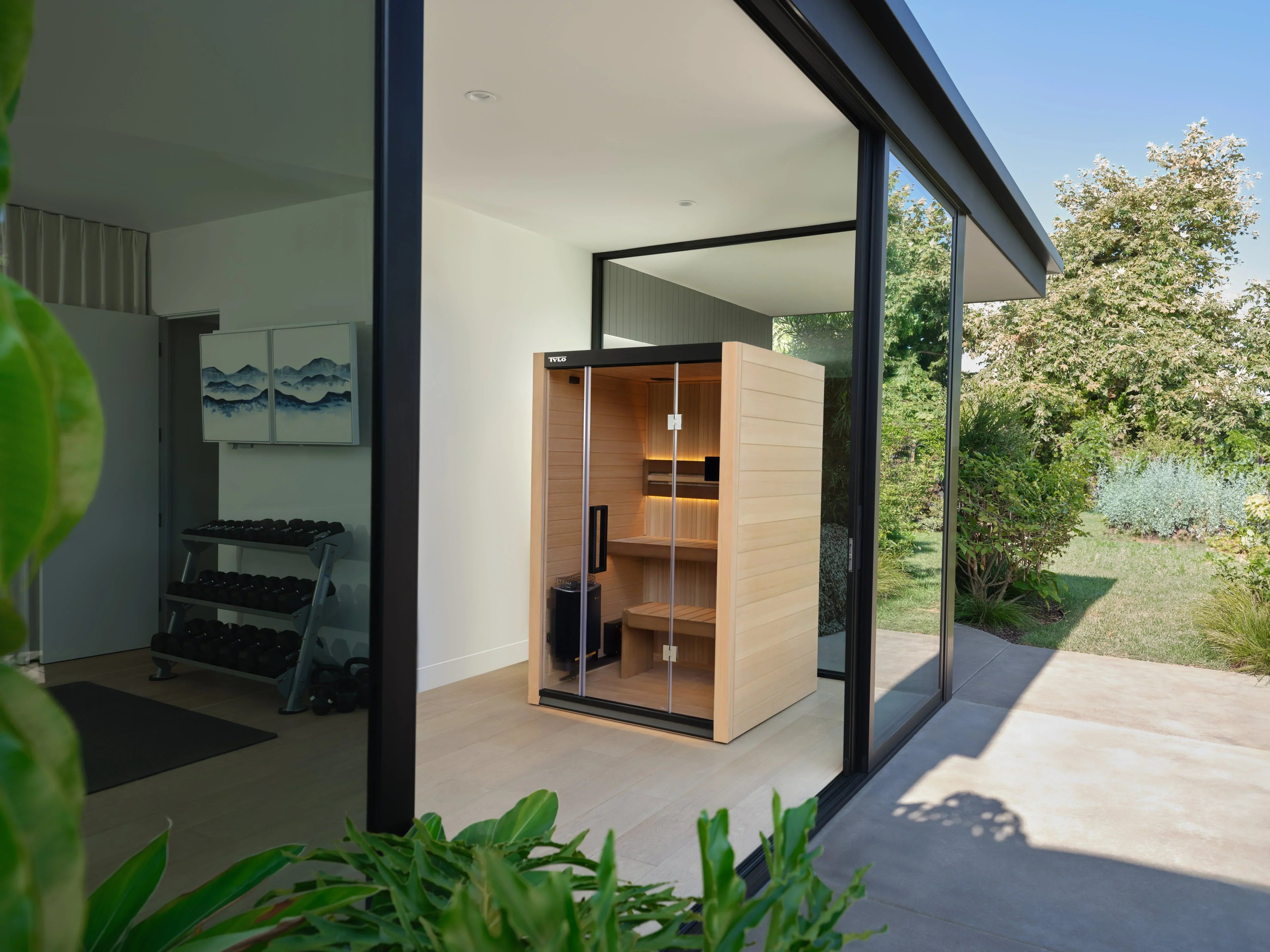
Sauna Vs Steam Room: Which one Is Better?
Dry Heat vs. Wet Heat—Which Is Right for Your Health, Home, and Lifestyle?
If you’re exploring heat therapy for your home, you’ve probably asked the question: should I get a sauna or a steam room? They’re both hot, they both make you sweat, and they both feel amazing. But that’s where the similarities end.
Saunas and steam rooms work in fundamentally different ways—different temperatures, different humidity levels, different construction, different health research, and very different considerations for home installation. Understanding these differences will help you choose the option that best fits your health goals, your space, and your budget.
At Leisure Time Inc., we carry Finnleo and Tylö saunas—two of the most respected names in the industry—in traditional, infrared, and hybrid configurations. We also have decades of experience helping Idaho families plan and install wellness spaces in their homes. In this guide, we’ll give you an honest, side-by-side comparison so you can make the right decision.
The Fundamental Difference: Dry Heat vs. Wet Heat
The core difference between a sauna and a steam room comes down to how they deliver heat and how much moisture is in the air.
Sauna (Dry Heat)
A traditional Finnish sauna uses an electric heater (or wood-burning stove) to heat rocks, which in turn heat the air in a wood-lined room to 150–195°F. Humidity stays low—typically 10–20%—though you can create brief bursts of steam (called löyly) by ladling water over the hot rocks. You control the experience. An infrared sauna uses infrared light panels to heat your body directly at lower air temperatures (120–150°F), with minimal humidity. Hybrid models like Finnleo’s InfraSauna combine both technologies in one unit.
Steam Room (Wet Heat)
A steam room uses a steam generator—essentially a commercial boiler installed outside the room—to pump steam into a sealed, tile-lined or stone-lined chamber. The air temperature stays lower at 100–120°F, but humidity reaches 100%. The room must be completely waterproof—every surface (walls, ceiling, floor) must be non-porous material like tile or stone. The ceiling is typically sloped to prevent condensation from dripping on occupants. Unlike a sauna where you actively adjust the experience, a steam room provides a consistent, passive environment.
Sauna vs. Steam Room: Head-to-Head Comparison
| Traditional Sauna | Steam Room | |
|---|---|---|
| Temperature | 150–195°F (65–90°C) | 100–120°F (38–49°C) |
| Humidity | 10–20% (dry heat) | ~100% (wet heat) |
| Heat Source | Electric heater or wood stove heats rocks and air | Steam generator boils water, pumps steam into room |
| Construction | Wood-lined room (cedar, spruce, hemlock) | Tile, stone, or non-porous material; fully waterproof |
| User Control | High – adjust temp, add water for steam bursts | Low – thermostat-controlled, consistent environment |
| Warm-Up Time | 30–60 min (traditional); 15–20 min (infrared) | 10–20 minutes |
| Session Length | 15–20 min (traditional); 30–45 min (infrared) | 15–20 minutes |
| How Sweat Works | Sweat evaporates from skin (natural cooling) | Sweat can’t evaporate; moisture condenses on skin |
| Energy Cost | ~$4–$6/month (traditional); ~$3–$5/month (infrared) | ~$3–$5/month (generator) |
| Installation | Wood room; standard electrical; no waterproofing | Fully waterproofed room; sloped ceiling; external generator |
| Home Feasibility | Excellent – prefab kits fit most homes | Complex – requires waterproofing, drainage, ventilation |
| Maintenance | Low – occasional wood care, heater inspection | Higher – descaling generator, tile/grout maintenance, mold prevention |
Health Benefits: What the Research Says
Both saunas and steam rooms offer genuine health benefits. But the depth of scientific evidence is very different for each.
Sauna: Decades of Large-Scale Research
The traditional Finnish sauna has the strongest body of medical research of any heat therapy. The landmark Kuopio Ischemic Heart Disease Risk Factor Study (KIHD), led by Dr. Jari Laukkanen at the University of Eastern Finland, followed over 2,300 men for 20+ years. The findings, published in JAMA Internal Medicine and Age and Ageing, showed:
- Men using the sauna 4–7 times per week had a 50% lower risk of cardiovascular mortality
- Frequent sauna users had a 65% lower risk of Alzheimer’s and dementia
- Regular use was associated with lower blood pressure, reduced stroke risk, and lower all-cause mortality
- A second study of 13,994 men and women (followed up to 39 years) confirmed these findings in both sexes
Additional research has documented benefits for muscle recovery, immune function, stress reduction (via cortisol lowering and endorphin release), improved sleep quality, skin health, and detoxification through deep sweating. The cardiovascular response during a sauna session—elevated heart rate, vasodilation, increased cardiac output—mimics moderate-intensity exercise, providing a passive cardiovascular “workout.”
Finnleo notes that heart rate can rise from a resting 60–70 bpm to 110–120 bpm during a moderate session. Dr. Rhonda Patrick has discussed extensively how heat shock proteins (HSPs) and brain-derived neurotrophic factor (BDNF) production during sauna use contribute to neuroprotection and longevity. Tylö highlights that consistent sauna heat helps lower cortisol and invites a deep sense of calm.
Steam Room: Supportive Evidence, Less Long-Term Data
Steam rooms offer real health benefits, but with significantly less long-term, large-scale research compared to saunas. The existing evidence supports:
- Respiratory relief: The high humidity opens airways, loosens congestion, and can benefit people with allergies, sinusitis, asthma, and upper respiratory conditions. This is the steam room’s strongest advantage over saunas.
- Skin hydration: The moist heat opens pores, hydrates the skin, and may benefit people with dry skin conditions. Saunas (especially traditional dry saunas) can feel drying to some users.
- Cardiovascular support: Steam rooms elevate heart rate and dilate blood vessels, providing cardiovascular benefits. A meta-analysis of hydrotherapy studies found that wet heat therapies lowered blood pressure significantly.
- Muscle relaxation and stress relief: The warm, humid environment promotes relaxation, reduces muscle tension, and lowers stress—similar to sauna, though through a different sensory experience.
The key difference: saunas have 20+ years of large-scale, population-based prospective research (the KIHD study and Finnish Mobile Clinic study) that directly links frequency of use to reduced mortality, cardiovascular events, and dementia risk. Steam rooms do not yet have this caliber of long-term evidence. The health benefits are plausible and supported by smaller studies, but the dose-response data that makes the sauna research so compelling simply doesn’t exist yet for steam rooms.
If cardiovascular protection, brain health, and longevity are your primary goals, the sauna has significantly stronger research support. If respiratory relief and skin hydration are your priorities, a steam room has a clear edge. For general relaxation and stress relief, both are excellent.
Home Installation: Sauna vs. Steam Room
This is where the practical decision often gets made—because the installation requirements for saunas and steam rooms are dramatically different.
Installing a Sauna at Home
Home saunas are surprisingly practical. Finnleo and Tylö both offer prefabricated modular kits that can be assembled in a spare room, basement, garage, master bathroom, or even outdoors. The room is wood-lined (cedar, spruce, or hemlock), requires standard electrical service (most traditional heaters need a 240V, 30–50 amp circuit), and does not need waterproofing, special drainage, or a sloped ceiling.
- Space: A 2-person sauna fits in as little as 4’ × 4’. Family-sized models run 5’ × 7’ to 6’ × 8’.
- Electrical: Traditional heaters require 240V dedicated circuit. Infrared saunas often run on a standard 120V outlet.
- Ventilation: Simple intake and exhaust vents; no mechanical ventilation required for most residential models.
- Flooring: Cement, tile, or any non-absorbent surface. No waterproofing needed.
- Assembly: Prefab kits from Finnleo and Tylö can often be assembled in a day.
- Cost: Home saunas range from ~$3,000 for a compact infrared unit to $10,000–$20,000+ for a custom-built traditional room.
- Operating cost: Finnleo reports $4–$6/month for a traditional sauna used 3 times per week; $3–$5/month for infrared.
Installing a Steam Room at Home
A home steam room is a significantly more complex project. Because the room operates at 100% humidity with constant steam, every surface must be completely waterproofed, and the construction requirements are more demanding:
- Construction: Walls and ceiling must be non-porous (tile, stone, glass). No wood. The ceiling must be sloped (typically 2” per foot) to direct condensation to the walls rather than dripping on occupants.
- Steam generator: A commercial steam generator must be installed in a separate dry, well-ventilated space within 25 feet of the room. Tylö specifically notes the generator cannot be inside the steam room.
- Waterproofing: Full waterproof membrane on all surfaces—walls, ceiling, and floor. This is the most critical and most expensive element.
- Drainage: A floor drain is required to handle condensation and periodic cleaning.
- Ventilation: Mechanical ventilation to manage humidity and prevent mold in adjacent spaces.
- Maintenance: Steam generators require regular descaling (frequency depends on water hardness). Tile and grout require ongoing maintenance to prevent mold and mildew in a 100% humidity environment.
- Cost: A home steam room typically costs $5,000–$15,000+ installed, depending on size, materials, and generator quality. Custom tile work can push costs significantly higher.
For most Idaho homeowners, a sauna is the far more practical choice for home installation. It requires less construction, less maintenance, and costs less to build and operate. If you love the steam room experience, Tylö’s Sense Combi heater offers a “Soft Sauna” mode that adds humidity to a traditional sauna room—giving you a steam-like experience without the complexity of a dedicated steam room.
Installation Comparison at a Glance
| Sauna | Steam Room | |
|---|---|---|
| Room Material | Wood (cedar, spruce, hemlock) | Tile, stone, glass (no wood) |
| Waterproofing | Not required | Full membrane – walls, ceiling, floor |
| Ceiling | Standard flat | Must be sloped (2”/ft) |
| Heat Source | Electric heater in room (or wood stove) | External steam generator (within 25 ft) |
| Drainage | Not required | Floor drain required |
| Ventilation | Simple intake/exhaust vents | Mechanical ventilation recommended |
| Electrical | 240V, 30–50 amp (traditional); 120V (infrared) | 240V for generator; varies by size |
| Prefab Kits | Yes – Finnleo and Tylö offer modular kits | Limited – most are custom-built |
| Typical Install Cost | $3,000–$20,000+ | $5,000–$15,000+ |
| Monthly Operating Cost | $3–$6 | $3–$5 (plus descaling) |
| Maintenance Level | Low | Moderate to High |
Which One Is Right for You?
Here’s a quick decision framework based on what matters most to you:
Choose a sauna if:
- Cardiovascular health, brain health, and longevity are your primary goals
- You want the strongest research-backed heat therapy available
- You prefer higher temperatures and dry heat (with optional steam bursts)
- You want a practical, lower-maintenance home installation
- You want flexibility (traditional, infrared, or hybrid in one unit)
- You live in Idaho and want a wellness space that’s easy to install and affordable to operate
Choose a steam room if:
- Respiratory relief is your top priority (allergies, sinusitis, congestion)
- You prefer gentle, moist heat at lower temperatures
- Skin hydration is a primary goal
- You’re building a custom home or commercial spa where full waterproofing is already part of the design
- You’re comfortable with higher construction costs and ongoing maintenance
Want both? Consider a hybrid:
Tylö’s Sense Combi heater offers a “Soft Sauna” mode that adds gentle steam to a traditional sauna room—lower temperature, higher humidity—without requiring a separate steam room. Finnleo’s InfraSauna combines traditional and infrared heating in one unit. And Tylö’s Panacea Twin is a premium solution that puts both a sauna and a steam room side by side in one elegant frame.
Frequently Asked Questions
Is a sauna or steam room better for weight loss?
Neither is a weight loss solution on its own. Both cause temporary water weight loss through sweating, which returns when you rehydrate. However, saunas have stronger evidence for improving cardiovascular conditioning and metabolic health over time, which can complement a healthy diet and exercise program.
Can I use a sauna if I have respiratory issues?
Traditional dry saunas may feel harsh for some people with sensitive airways, though many users find the dry heat beneficial. If respiratory relief is your primary concern, a steam room’s moist heat is generally more soothing for congestion and airway issues. Tylö’s Soft Sauna mode offers a middle ground with added humidity in a sauna environment.
Is a steam room harder to maintain than a sauna?
Yes. Steam rooms require regular descaling of the generator (frequency depends on water hardness), ongoing tile and grout maintenance, and vigilant mold prevention due to the 100% humidity environment. Saunas require minimal maintenance—occasional wood care and periodic heater inspection.
Can I install a sauna in my existing home?
Absolutely. Finnleo and Tylö both offer prefabricated modular sauna kits that fit in a spare room, basement, garage, or master bath. Many models can be assembled in a day with standard tools. Visit our showrooms to see sizing options and plan your installation.
What’s the difference between Finnleo and Tylö?
Finnleo and Tylö are both part of the same parent company (Sauna360/TylöHelo) and share a heritage of Scandinavian craftsmanship. Finnleo has been a dominant sauna brand in the U.S. for over 36 years, known for its traditional Finnish saunas, infrared models, and InfraSauna hybrids. Tylö, founded in Sweden in 1949, is renowned for its innovative heater technology—including the Sense Combi and Soft Sauna concept—and sleek modern designs. Both are available at Leisure Time Inc.
Does Leisure Time Inc. sell steam rooms?
We specialize in saunas (Finnleo and Tylö), which we believe offer the best combination of health benefits, home feasibility, and long-term value for our Idaho customers. If you’re interested in a steam experience, we recommend exploring Tylö’s Sense Combi heater, which adds a Soft Sauna steam mode to any traditional sauna room.
At Leisure Time Inc., we carry a full lineup of Finnleo and Tylö saunas—traditional Finnish, infrared, and hybrid models—in a range of sizes and configurations to fit any home. Our knowledgeable sauna specialists will help you choose the right type, size, and configuration based on your health goals, available space, and budget.
Your wellness journey starts with the right decision—let us help you make it.
Browse Finnleo Saunas: leisuretimeinc.com/collections/finnleo-saunas
Browse Tylö Saunas: leisuretimeinc.com/collections/tylo-saunas
Shop Sauna Accessories: shop.leisuretimeinc.com
Learn More: finnleo.com/sauna-health-wellness-benefits
Locations: leisuretimeinc.com/pages/locations
Boise: (208) 376-0180 • Idaho Falls: (208) 523-4633 • Twin Falls: (208) 933-4295